




Palm Oil in Nigeria: How Toxic Dyes Are Raising Cancer Fears
By Global Affairs Hub 247 Investigations Desk
Before sunrise at a market in southern Nigeria, the jerrycans are already lined up. The oil inside glows a deep sunset red, the colour buyers have trusted for generations. Traders lift the containers to the light and tilt them slowly. Shoppers do the same, because in West Africa everyone knows that good palm oil is supposed to look like this.
That trust is what a quiet and dangerous trade exploits.
Across Nigeria, Ghana and the wider region, food regulators and university researchers keep finding the same thing. Some of the “perfect” red oil sold in open markets has been dyed with industrial colourants never meant for food. At least one of them, Sudan IV, has been linked to cancer in laboratory studies. Meanwhile, cancer is becoming one of the region’s biggest killers.
This investigation looks at how palm oil is made, what it contains, where things go wrong, and what families can do to protect themselves.
What is palm oil?

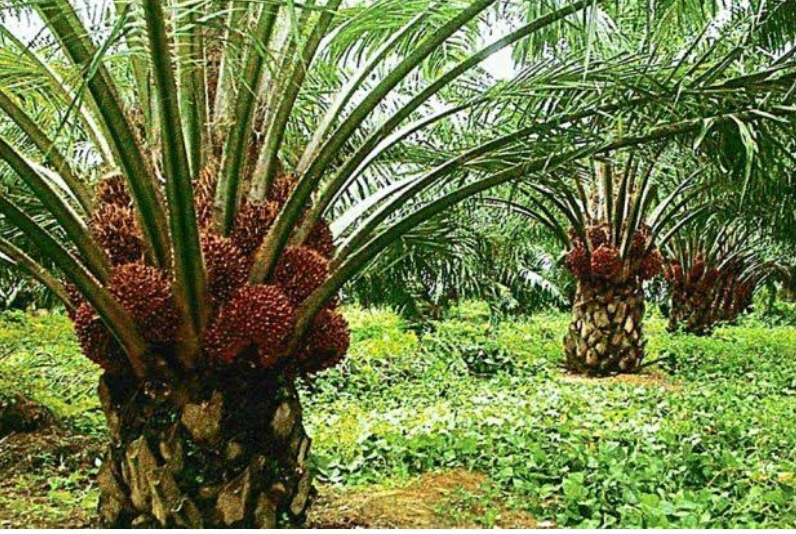
Palm oil is an edible vegetable oil pressed from the fruit of the African oil palm (Elaeis guineensis). The tree is native to West and Central Africa. Long before palm oil ended up in supermarket biscuits and soaps worldwide, it was at the heart of West African cooking in dishes like banga soup, egusi, ofe owerri, red stew and jollof.
One palm fruit gives two different oils:
- Palm oil (red palm oil): pressed from the fleshy orange-red outer pulp. This is the oil sold in West African markets.
- Palm kernel oil: pressed or solvent-extracted from the hard seed inside the fruit. It is pale and used mostly in soaps, cosmetics and processed foods.
Today Indonesia and Malaysia dominate global production. Nigeria is still Africa’s largest producer and one of the world’s biggest consumers. It also imports palm oil to meet local demand, and that supply gap creates room for fraud.
What’s in palm oil nutritionally?

Palm oil is not a villain. Fresh, unadulterated red palm oil is one of the most nutrient-rich cooking oils in the world.
Fat profile (approximate):
| Component | Share of total fat |
|---|---|
| Palmitic acid (saturated) | ~44% |
| Oleic acid (monounsaturated, also in olive oil) | ~39% |
| Linoleic acid (polyunsaturated, omega-6) | ~10% |
| Stearic acid (saturated) | ~5% |
One tablespoon (about 14 g) has roughly 120 calories. Nearly all of it is fat, and about half of that fat is saturated.
What makes red palm oil special:
- Beta-carotene: Unrefined red palm oil is one of the richest plant sources of carotenoids, which the body turns into vitamin A. Nutrition programmes in Africa and Asia have used it to fight vitamin A deficiency in children.
- Vitamin E (tocotrienols and tocopherols): These are antioxidants that researchers are studying for possible heart and brain benefits.
- Natural stability: Because of its saturated fat, palm oil resists spoiling better than many other oils at moderate cooking temperatures.
The caution: The high saturated fat content means doctors advise moderation, especially for people with heart disease risk. Refining also strips out most of the carotenoids. That is why supermarket “vegetable oil” made from palm is pale yellow, not red.
Traditional (artisanal) processing
The point is that the danger does not come from the palm fruit. It comes from what people do to the oil.
How palm oil is made in Africa
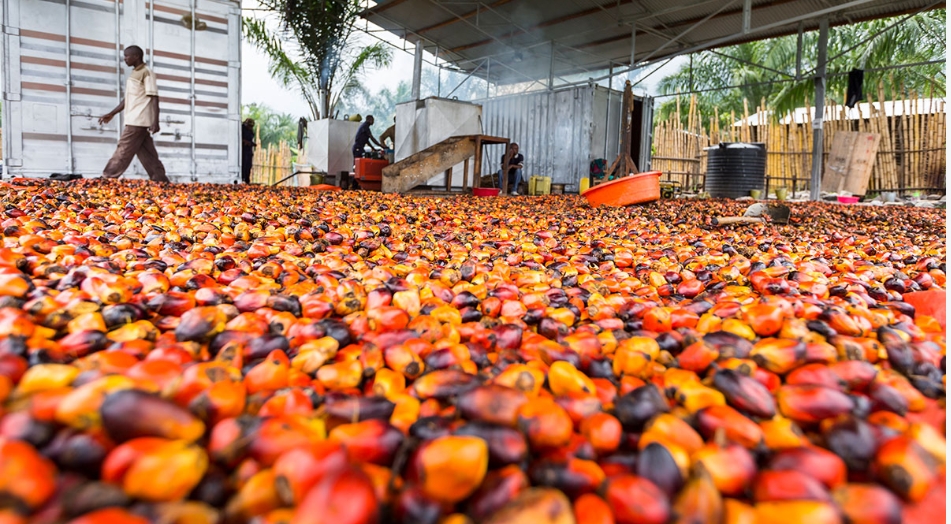
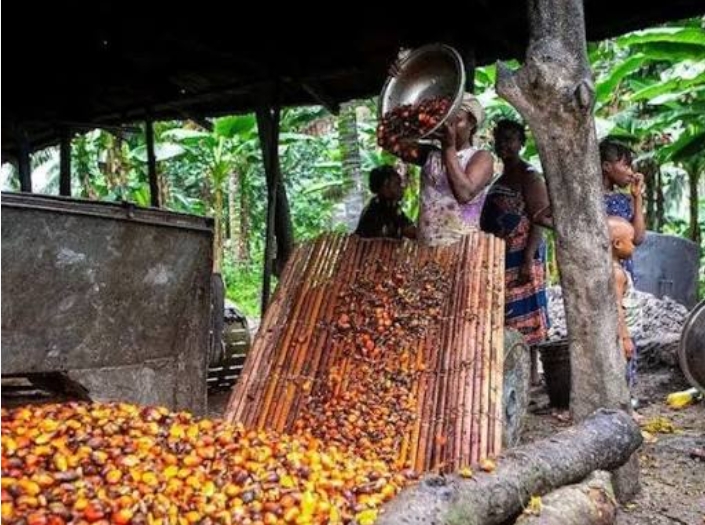
Most of the red oil in West African markets still comes from small-scale processors, often women’s cooperatives, working with simple tools:
- Harvesting: Ripe fruit bunches are cut from the palm, often by climbers using ropes and machetes.
- Heaping/fermenting: Bunches are left for a few days to loosen the fruits. If they sit too long, free fatty acids rise and the oil turns sour and lower in quality.
- Threshing: The fruits are separated from the bunch by hand or machine.
- Boiling: The fruits are cooked in drums to soften the pulp and stop enzyme damage.
- Pounding/digesting: The soft fruits are pounded in mortars or crushed in small motorised digesters.
- Pressing: A manual or hydraulic press squeezes out a mix of oil, water and fibre.
- Clarification: The mix is boiled again, and the red oil floats to the top and is skimmed off.
- Drying and storage: The oil is heated to drive off water, then poured into drums or jerrycans for sale.
Done well, this gives authentic red palm oil. Done badly, with overripe fruit, dirty water, long delays or re-used chemical containers, it gives oil that is rancid, contaminated, or dull in colour. Dull colour is where the temptation to cheat starts.
Industrial processing and refining
Large mills follow the same basic steps with steam sterilisers and screw presses. Much of their oil is then refined into the clear, odourless oil used by food manufacturers. Refining involves:
- Degumming: Phosphoric acid is added to remove gums and phospholipids.
- Neutralisation: In chemical refining, caustic soda (sodium hydroxide) removes free fatty acids.
- Bleaching: Activated clay (“bleaching earth”) absorbs pigments and impurities. This is why refined palm oil loses its red colour.
- Deodorisation: The oil is steam-heated to about 240–270°C under vacuum to strip out odours.
- Fractionation: The oil is cooled and separated into liquid palm olein (cooking oil) and solid palm stearin (margarine, shortening).
Palm kernel oil is often extracted with hexane, a petroleum solvent that is mostly removed before sale.
These are legal, regulated food-industry processes. But they have side effects, as explained below.
What chemicals are being added, legally and illegally?
This is the core of the investigation. It helps to split the chemicals into three groups.
1. Legal processing aids

Phosphoric acid, caustic soda, bleaching earth and hexane are standard refining tools used worldwide. When properly controlled, very little remains in the final product. They are not the main story.
2. Contaminants created by high-heat refining
When palm oil is heated to very high temperatures during deodorisation, compounds called glycidyl esters (GE) and 3-MCPD esters form.
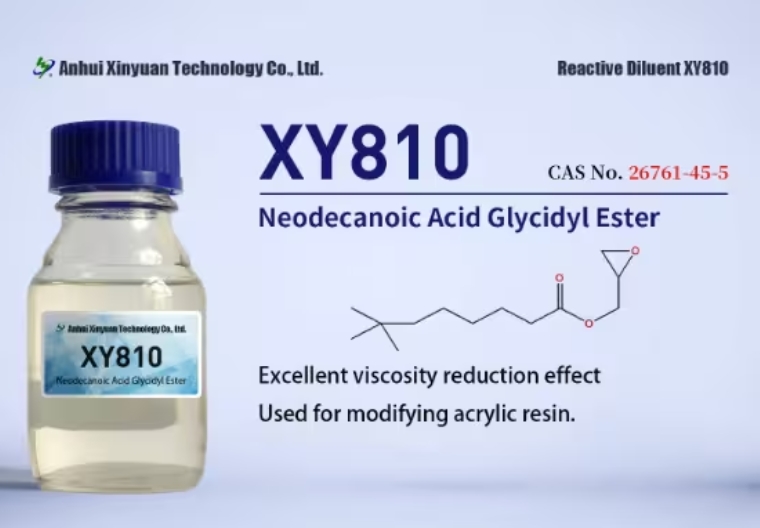
- In 2016 the European Food Safety Authority (EFSA) concluded that glycidyl esters are genotoxic and carcinogenic, and that palm oil and palm fat produced the highest levels of all vegetable oils it looked at.
- The International Agency for Research on Cancer (IARC) classifies glycidol as “probably carcinogenic to humans” (Group 2A) and 3-MCPD as “possibly carcinogenic” (Group 2B).
- The European Union has since set legal maximum limits for these contaminants in oils and infant foods.
Most West African countries have no equivalent limits, and very few labs routinely test for them.
3. Illegal adulterants: the “Sudan dye” problem
This is the most alarming practice. Sudan dyes (Sudan I–IV) are synthetic industrial dyes made to colour things like solvents, waxes, shoe polish and plastics. They are banned in food in the EU, the United States and across West Africa.
Why would anyone put them in palm oil? Because colour sells. A dye can:
- make pale, old or poorly processed oil look fresh and deep red;
- hide oil that has been diluted with cheaper, colourless oils;
- let a trader charge premium prices for inferior stock.
What the research shows:
What the research shows:
- Researchers at Ghana’s Kwame Nkrumah University of Science and Technology (KNUST) have studied how common Sudan IV adulteration is in palm oil sold in the Greater Accra Region.
- A 2026 study in the Journal of Food Quality tested market palm oil in Ghana’s Eastern Region for Sudan dyes and surveyed vendors about what they knew and believed about the practice.
- Animal studies have linked exposure to Sudan IV-adulterated palm oil with changes in blood-related measures in rats.
- Even outside Africa, a US survey of palm oil and chilli spices sold in the Washington, DC area found Sudan dyes in some imported palm oil, which shows the problem travels with exports.
Why Sudan dyes are linked to cancer: In the body, azo dyes like Sudan IV can break down into aromatic amines, including o-toluidine, which IARC classifies as a known human carcinogen (bladder cancer). Sudan dyes have caused tumours in laboratory animals, and regulators worldwide treat them as a food safety hazard at any level. IARC has not formally classified Sudan IV itself as a proven human carcinogen, and that nuance matters. But no regulator anywhere considers it acceptable in food.
Other unsafe practices reported in local markets
- Mixing palm oil with cheaper or used oils.
- Re-using oil again and again for street frying, which builds up oxidation products linked to health harm.
- Storing oil in old chemical or fuel containers.
- Selling oil made from overripe, heavily fermented fruit, which has high rancidity.
Is palm oil causing cancer in Nigeria and West Africa?
The honest answer is more complicated than any headline, and readers deserve that honesty.
What we know:
- Cancer is a large and growing crisis in Nigeria. IARC’s GLOBOCAN estimates put Nigeria’s toll at roughly 128,000 new cancer cases and nearly 80,000 deaths in 2022. The most common cancers are breast, prostate, cervical, liver and colorectal.
- Sudan dyes, glycidyl esters and repeatedly heated oils are all recognised or suspected cancer hazards.
- Adulterated palm oil is being sold in West African markets, and many consumers cannot tell the difference.
What we don’t know yet:
- No large population study has yet directly measured how many cancers in Nigeria or West Africa are caused by adulterated palm oil. Cancer usually has many causes that build up over years.
- Other major drivers are well documented: hepatitis B and C and aflatoxin (a mould toxin in poorly stored grains and groundnuts) for liver cancer, HPV for cervical cancer, plus tobacco, alcohol, ageing populations, and late diagnosis caused by weak screening and treatment systems.
The fair conclusion: Palm oil itself is not a “cancer oil.” But a food eaten daily, by almost everyone, that is sometimes laced with banned carcinogenic dyes is a public health risk that should not be ignored. The “curse” is not the palm tree. It is fraud, weak enforcement and a lack of testing.

Why the problem persists
- Weak market surveillance: Regulators like Nigeria’s NAFDAC and the Ghana FDA have warned the public and carried out seizures. But thousands of informal traders and open markets are very hard to police.
- Few testing labs: Screening for Sudan dyes or glycidyl esters needs lab equipment that most local markets and small processors can’t access.
- Economic pressure: Rising costs and a gap between local supply and demand reward anyone who can make cheap oil look premium.
- Low awareness: Vendors may buy already-dyed oil from middlemen without knowing it. Consumers judge quality almost entirely by colour.
How to spot adulterated palm oil at home
None of these tests is as reliable as a lab test, but they can raise a red flag:
- The water test: Put a small amount of oil in a glass of water. Genuine palm oil separates cleanly. If the water turns noticeably red or orange, dye may be leaching out.
- The cotton or paper test: Dip white cotton wool or tissue in the oil. An unusually bright, “painted” red stain that doesn’t fade may suggest dye.
- The fridge test: Pure palm oil partly solidifies when chilled. Oil that stays fully liquid may have been mixed with other oils.
- The smell test: Real palm oil has a nutty, earthy smell. A chemical, rancid or strangely odourless smell is a warning.
- The price test: Oil sold far below the market price almost always has a reason behind it.
- Know your source: Buy from trusted processors, cooperatives, or NAFDAC-registered brands with a batch number and expiry date.
What needs to change
- Routine market testing for Sudan dyes, with results published.
- Tougher penalties that go after the supply chain, not just small retailers.
- Legal limits and monitoring for glycidyl esters and 3-MCPD in refined oils, especially in infant foods.
- Support for small processors: better equipment and training so honest producers can make bright, high-quality oil without cutting corners.
- Consumer education in local languages, through markets, churches, mosques and radio.
- More research that directly studies the link between adulterated oils and cancer rates in the region.
Conclusion: protecting a heritage
Palm oil has fed West Africa for thousands of years. It carries culture, livelihoods and vital nutrients. What threatens it now is not the palm tree but the people who profit from poisoning its oil, and the systems that let them get away with it.
Until testing, enforcement and awareness catch up, the safest advice is simple. Don’t judge palm oil by its colour alone, know where your oil comes from, and demand that regulators test what ends up on the family table.