
Ibom Deep Seaport Approved, Answering Akwa Ibom’s Decades-Old Demand
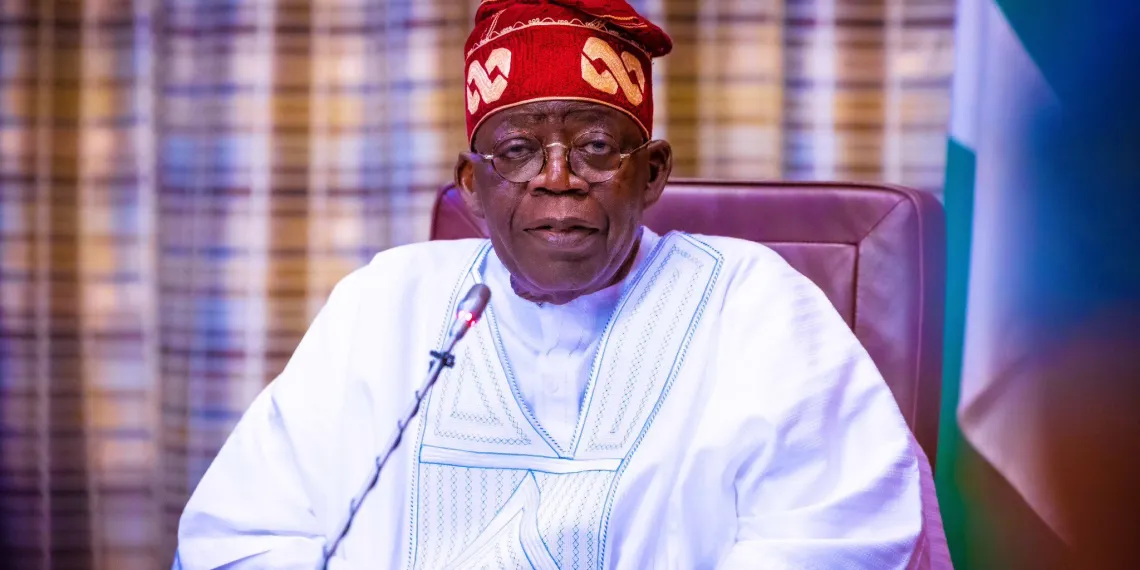
UYO — President Bola Ahmed Tinubu has approved the long-awaited Ibom Deep Seaport, announcing the decision at a campaign rally in Uyo, the Akwa Ibom State capital. He spoke at the Godswill Akpabio International Stadium, responding to a direct appeal from Governor Umo Eno.
Governor Eno had promised the president a strong show of loyalty at the polls. “Give us Ibom Deep Seaport, and we will deliver two million votes,” he said. “This deep seaport is capable of unlocking the economy of the state, the South-South region and Nigeria at large.”
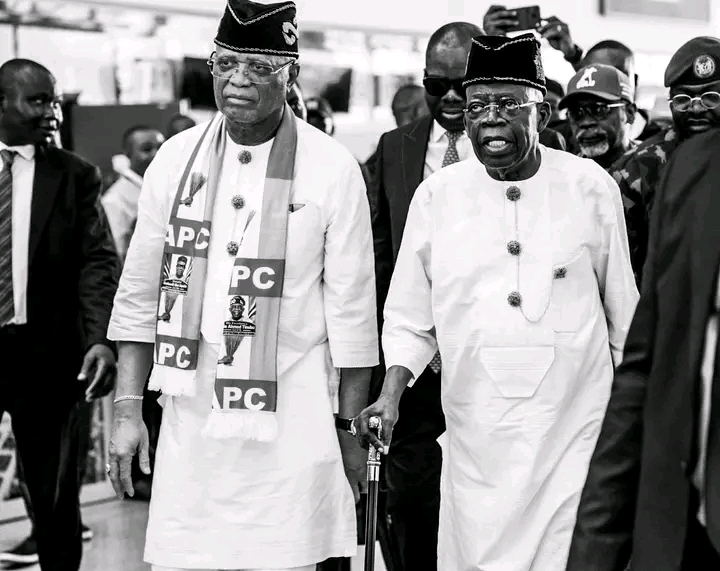
He called the port the most important economic demand of the state’s people. He also outlined how it could reshape Akwa Ibom’s maritime, industrial and employment landscape.
Eno reminded the president that Akwa Ibom has stood by him and his administration since he took office in 2023. The state is now politically aligned with him through the All Progressives Congress (APC).
The promise itself is not new. During his 2023 campaign, Tinubu pledged to build the port. He pointed to the Lekki Deep Seaport, developed while he was Lagos State governor, as proof of what he could deliver.
The project dates back to the administration of former governor Victor Attah, who conceived it as the Ibaka Deep Seaport and Industrial City. It has featured in successive presidential campaigns but has remained unbuilt for decades.
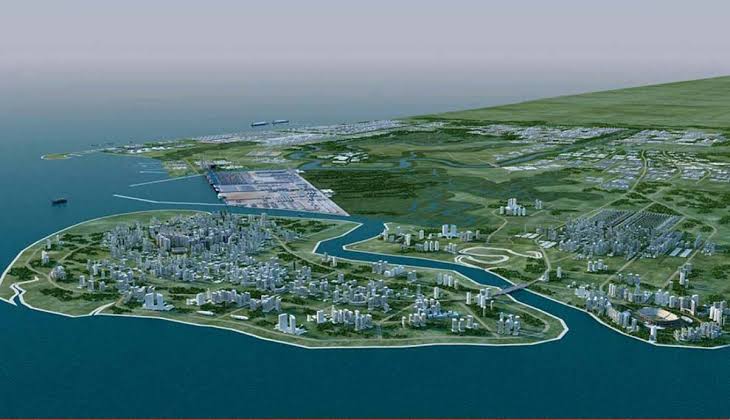
“This seaport would serve as a major transshipment hub. It will create thousands of jobs for our people. It will open Akwa Ibom to international trade and investment,” Eno said.
Tinubu, on a working visit to inaugurate projects in the state, said that development must be inclusive and deliver real economic value. “Development must be inclusive and reasonable, bringing progress and creating economic value,” he said.
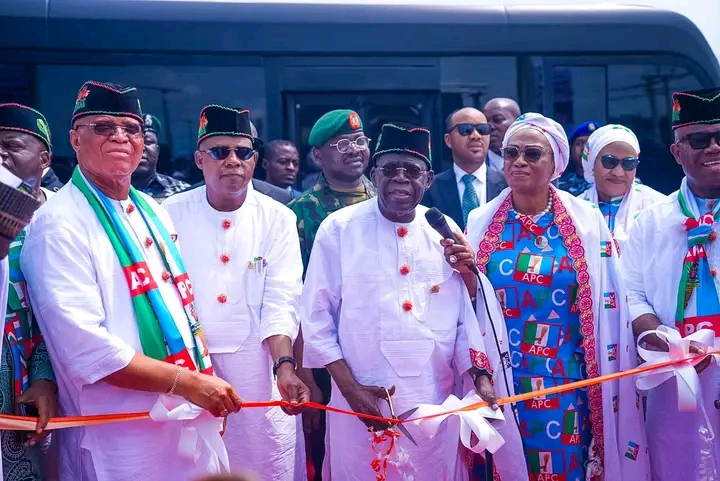
Then he turned to the crowd. He said he had heard the request for the deep seaport from “my friend, my governor, and my pastor”, who spoke for the people and leadership of Akwa Ibom State. “Will you vote?” he asked. Then he declared, “Okay, it’s approved.”
Akwa Ibom’s Economic Outlook
Akwa Ibom enters this moment with real weight. Its economy is dominated by oil and gas, and it ranked 8th of 36 states by GDP in 2023, at ₦9.07 trillion. The state is also spending more. Governor Eno presented a ₦1.39 trillion budget proposal for 2026, up sharply from the ₦955 billion originally appropriated for 2025, which was later revised to ₦1.65 trillion.
The government is working to reduce its dependence on crude oil. Its stated opportunities include agriculture (oil palm, cassava and fisheries), tourism, manufacturing, aviation and maritime logistics, supported by assets such as the state-owned Ibom Air and dedicated industrial parks. The 2026 budget policy objectives also include moving the state economy from crude oil dependence toward a diversified service economy.
What the Port Could Change
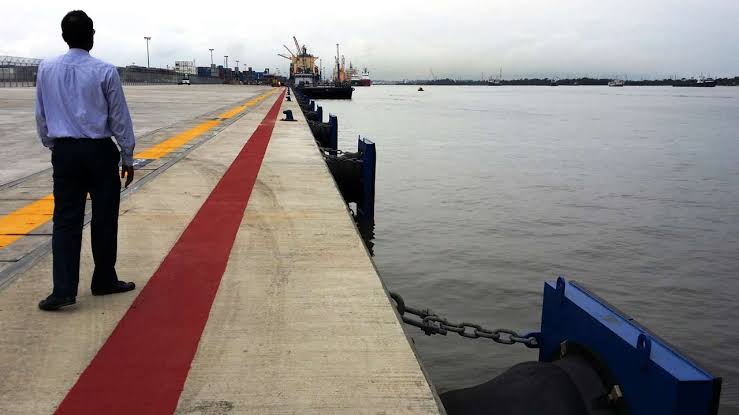
A working deep seaport would be the most significant piece of that diversification. The port has been planned as a major container hub. It is designed for container vessels of 13,000 TEU, with a capacity of 9 million TEUs. It is meant to serve the South-South and South-East and ease congestion at existing ports. Once open, it could port
Create jobs. Officials have projected at least 300,000 jobs from the first phase of the port and the Ibom Industrial City. That is a government projection, not an independent estimate.
Anchor an industrial city. The port is designed as the gateway to the Ibom Industrial City, connected to the airport, rail lines and federal and state roads. Manufacturers and processors could ship directly from the state.
Open export markets. Oil palm, cocoa and other farm products could reach international buyers more cheaply. The government has already turned to non-oil exports, including cocoa, maritime and agricultural products.
Widen the revenue base. Port fees, logistics services and new businesses would add to the state’s internally generated revenue and reduce its exposure to oil price swings.
The Road Ahead
Approval is merely the initial step. The total cost is put at $4.6 billion, with the first phase alone at $2.016 billion. That is almost three times the cost of the Lekki Deep Seaport, which was largely a private-sector project. Financing will be the central test. The state recently signed a preliminary MoU with the Interaf Group Consortium on developing and operating the port. Nigeria also has a record of announced deep seaports that have stalled or seen little progress.
For many Akwa Ibomites, the approval is welcome news. What happens next, in funding, construction and delivery, will show whether this promise finally becomes a port.