

The Attorney General Who Was Supposed to Prosecute Looters Allegedly Looted Nigeria Dry
A Critical Examination of the Malami Asset Forfeiture Case and the Cost of Political Corruption
Investigative Report | July 17, 2026
Introduction
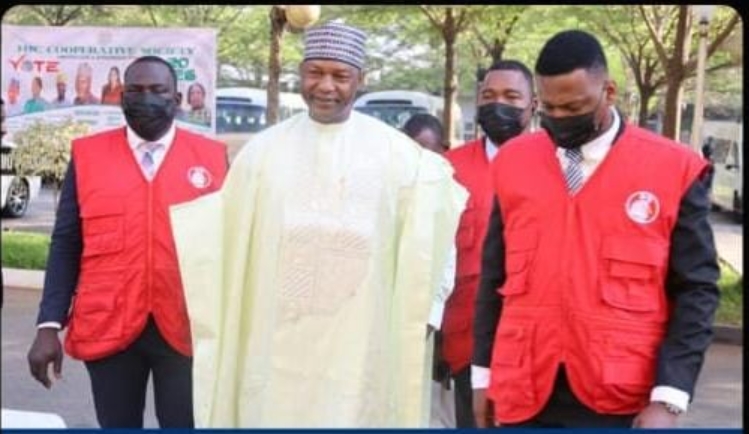
There is a particular kind of irony that Nigerians have learned to absorb without much shock: the man once entrusted with the constitutional duty to prosecute corruption has now become the subject of one of the country’s largest asset forfeiture cases. On July 15, 2026, the Federal High Court in Abuja ordered the final forfeiture of 48 properties linked to Abubakar Malami, SAN, who served as Nigeria’s Attorney General and Minister of Justice from 2015 to 2023, to the Federal Government. The properties — hotels, a university, factories, plazas, filling stations and family homes spread across Abuja, Kano, Kaduna and Kebbi States — were valued by the Economic and Financial Crimes Commission (EFCC) at roughly ₦213 billion.
The case has drawn national attention not merely because of the scale of the assets involved, but because of who is at its centre. Malami was, for nearly eight years, Nigeria’s chief law officer — the official whose office decides which corruption cases proceed, which are withdrawn, and how the machinery of justice is deployed against public officials accused of stealing from the state. That his own acquisitions would later be scrutinised under the same anti-corruption laws his office was charged with enforcing has struck many Nigerians as a bitter demonstration of what happens when accountability structures are left to police themselves.
It is important, from the outset, to state plainly what the court has and has not decided. The Federal High Court’s ruling is a civil, non-conviction-based forfeiture order — a determination that the EFCC established “reasonable suspicion” that the properties were proceeds of unlawful activity. It is not a criminal conviction, and Malami has not been found guilty of any crime in relation to these specific properties. He denies wrongdoing, has instructed his lawyers to appeal the judgment, and separately faces ongoing criminal trials whose outcomes remain undetermined. This article examines the court’s findings, the scale of the forfeited assets, and what the episode reveals about the durability of corruption within Nigeria’s political and institutional life while carefully distinguishing between what has been proven, what has been alleged, and what remains before the courts.
Who Is Abubakar Malami?
Born on April 17, 1967, in Birnin Kebbi, Kebbi State, Abubakar Malami trained as a lawyer at Usmanu Danfodiyo University, graduating in 1991 and being called to the Nigerian Bar in 1992. He later earned a master’s degree in public administration from the University of Maiduguri. Before entering federal politics, he worked as a state counsel and magistrate in Kebbi State and was active in party politics, serving as National Legal Adviser to the Congress for Progressive Change and later helping draft the manifesto of the All Progressives Congress (APC) ahead of its formation in 2013.
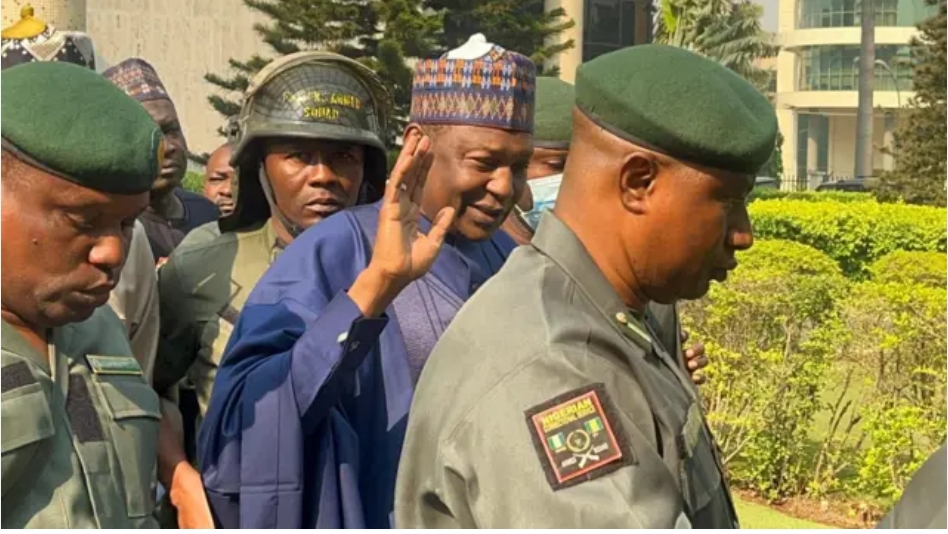
President Muhammadu Buhari appointed Malami Attorney General and Minister of Justice on November 11, 2015 — making him, at the time, the youngest member of the cabinet. He was reappointed in August 2019 and served until the end of the Buhari administration on May 29, 2023, one of the longest-serving justice ministers in Nigeria’s Fourth Republic.
As Attorney General, Malami held the constitutional office described in Section 174 of the 1999 Constitution: the power to institute, take over, or discontinue criminal proceedings against any person in any court in Nigeria, and to serve as the government’s chief legal adviser. It is a position of immense discretion, sitting at the intersection of law and politics, and one that Nigeria’s anti-corruption architecture depends on functioning with integrity.
His tenure recorded genuine achievements. He led negotiations that recovered more than $300 million in funds looted by the late military ruler Sani Abacha, an agreement announced in December 2017 and formally signed in February 2020, with recovered funds nominally channelled into infrastructure projects such as the Lagos-Ibadan Expressway and the Second Niger Bridge. In October 2020, his office concluded a seven-year international arbitration dispute with Interocean Oil, relieving the Nigerian government of a potential $1.5 billion liability.
But his tenure was also marked by recurring controversy. In 2020, he petitioned for the removal of the EFCC’s then-acting chairman, Ibrahim Magu, alleging financial impropriety — a move that itself raised questions given the AGF’s simultaneous oversight of prosecutorial policy. His office was also criticised for taking over and withdrawing corruption cases involving politically connected figures, including a ₦25 billion fraud trial against a sitting senator that was discontinued shortly after a political realignment. The House of Representatives at one point queried an alleged ₦800 billion discrepancy in recovered loot and an unexplained ₦2 billion Central Bank payment. These were allegations and legislative inquiries, not adjudicated findings of guilt, but they formed part of a pattern of scrutiny that culminated in the present asset forfeiture proceedings.
The Court’s Findings
The case against the Malami-linked properties began with an EFCC investigation into the sources of funding behind a portfolio of assets acquired during and after his time in government. On January 16, 2026, the EFCC obtained an interim forfeiture order from a Federal High Court vacation judge covering 57 properties, valued in total at approximately ₦213 billion. An interim order freezes assets and invites any interested party to appear and show cause why the properties should not be permanently forfeited — it is a preservation measure, not a final determination.
Following months of proceedings in which lawyers for Malami, his family, and affiliated entities contested the application, Justice Joyce Abdulmalik of the Federal High Court, Abuja, delivered the final ruling on July 15, 2026. The court forfeited 48 of the 57 properties permanently to the Federal Government, while discharging the interim order on the remaining nine after their owners were able to demonstrate a legitimate basis for their acquisition.
The legal foundation for the ruling was Section 17 of the Advance Fee Fraud and Other Fraud Related Offences Act, which permits the forfeiture of property upon a civil standard of “reasonable suspicion” that it constitutes proceeds of unlawful activity — a considerably lower threshold than the “proof beyond reasonable doubt” required for a criminal conviction. The court held that the central question was not who legally held title to the properties, but whether the funds used to acquire them could be shown to be legitimate. In its judgment, the court found that the respondents failed to satisfactorily account for the sources of the funds used to acquire the 48 properties.
Counsel for Malami, led by Adedayo Adedeji, SAN, had urged the court to dismiss the application, arguing that the EFCC’s case rested on suspicion rather than credible evidence, that the properties were lawfully acquired after his appointment and duly declared to the Code of Conduct Bureau, and that the commission’s valuation of the assets was exaggerated. EFCC counsel, led by Jibrin Okutepa, SAN, maintained that Malami had failed to provide a satisfactory account of the legitimate sources of the funds.
It bears repeating that this is a civil forfeiture, not a criminal conviction. Malami has announced his intention to appeal the ruling before the Court of Appeal, stating that he “respectfully disagrees with aspects of the judgment” and urging the public “to avoid drawing premature conclusions while the legal process continues.” Separately, and distinctly from the forfeiture case, Malami, his wife, and his son were arraigned in December 2025 on a 16-count criminal money laundering charge involving an alleged ₦8.7 billion, and in February 2026 Malami and his son were also arraigned by the State Security Service on terrorism-financing and firearms-related charges. Both criminal matters remain pending, and under Nigerian law the defendants are presumed innocent unless and until convicted.
A Portfolio Across Four States
Rather than a simple inventory, the forfeited assets are best understood as two clusters. The smaller cluster, roughly twenty properties, sits in Abuja and includes a luxury duplex in Maitama (valued at approximately ₦5.95 billion), a commercial building in Garki (₦7 billion), and two branches of the Meethaq Hotels chain — a five-storey property in Jabi (₦8.4 billion) and another in Maitama (₦12.95 billion) — along with terraced houses in Asokoro, a retail unit in a Wuse II plaza, additional holdings linked to Nasarawa and Kano, and a residential bungalow in Kaduna.
The larger cluster, some 28 properties, is concentrated in Kebbi State, Malami’s home state, and centres on an extensive commercial and educational estate. It includes Rayhaan University’s permanent campus (₦56 billion), temporary campus (₦37.8 billion) and a third site (₦2.45 billion), along with the vice-chancellor’s official residence. Adjoining this is the Rayhaan Agro Allied Factory complex — production buildings, industrial machinery valued at ₦10.5 billion, staff quarters and ancillary structures — and the “Azbir Arena” precinct, comprising the Azbir Hotel (₦10.325 billion), a printing press, a gallery, gardens, a pharmacy and a supermarket. Further Kebbi holdings include the Rayhaan Model Academy (₦11.2 billion), a combined primary and secondary school (₦8.75 billion), a radio station, a fuel filling station, a tanker garage, an uncompleted shopping plaza, and buildings associated with the Malami Support Organisation and the ADC Kadi Malami Foundation. A related set of residential bungalows and farmland near Birnin Kebbi were held through the Khadimiyya for Justice and Development Initiative, a charitable body Malami co-founded.
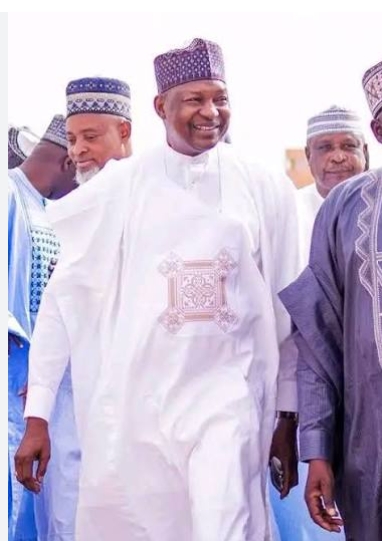
Taken together, the EFCC valued the full 57-property portfolio at roughly ₦213 billion; the 48 properties finally forfeited account for the substantial majority of that figure, with the nine released assets making up the balance.
What ₦213 Billion Could Have Done for Nigeria
Placed against Nigeria’s own budgetary figures, the scale of the sum becomes clearer. Nigeria’s 2026 federal budget was passed at roughly ₦68.3 trillion; ₦213 billion equals a little over three-tenths of one percent of that entire national budget — yet it is enough to fund substantial, tangible public investment. In March 2026, the federal government approved roughly ₦7.4 billion to build 25 primary healthcare centres across the six geopolitical zones — meaning a sum of ₦213 billion, applied at a comparable rate, could plausibly fund several hundred such clinics, extending basic maternal, child and emergency care to underserved rural communities. The same amount could support thousands of kilometres of rural feeder roads linking farms to markets, meaningful expansion of rural electrification and borehole water schemes, seed capital for youth employment and agricultural extension programmes, and multi-year scholarship or research funding for public universities. None of these are precise costings — construction and programme costs vary by location and design — but the comparison illustrates a basic truth: sums of this size, deployed transparently, are large enough to alter development outcomes for millions of Nigerians, particularly in a country where over 60 percent of the population lives in multidimensional poverty.
The Bigger Picture: Corruption in Nigerian Politics
The Malami case did not emerge from nowhere. Nigeria’s Corruption Perceptions Index score has stagnated at 26 out of 100, and the country slipped to 142nd out of 180 nations in Transparency International’s 2025 rankings — a reflection, analysts say, of persistent weaknesses in the judiciary, the legislature, and public procurement. Corruption in Nigeria endures partly because institutions built to check it — the EFCC, the Independent Corrupt Practices Commission, the judiciary — often lack full operational independence from the political executives whose allies they must sometimes investigate. Political patronage networks reward loyalty over accountability, prosecutorial discretion is at times applied selectively along political lines, asset declarations to the Code of Conduct Bureau are rarely made public or independently verified, and public procurement remains a well-documented channel for diversion, as seen in the ₦22.3 billion unaccounted for at the state oil company and ₦128 billion in alleged power-sector misappropriation flagged in 2025. The consequence is a system in which consequences for the powerful remain the exception rather than the rule.
When Anti-Corruption Institutions Lose Credibility
When the very office responsible for prosecuting graft becomes the subject of a ₦213 billion forfeiture case, the damage extends beyond one individual’s reputation. Public trust in the EFCC and the Ministry of Justice erodes further when citizens perceive that oversight applies more readily to political opponents than to allies. The irony of a former chief law officer facing forfeiture proceedings under the very statutes his office once enforced feeds public cynicism about whether anti-corruption efforts are principled or selective. Internationally, cases of this magnitude reinforce Nigeria’s poor corruption rankings and factor into investor risk assessments, potentially raising the cost of capital and discouraging foreign direct investment at a time the country can ill afford it. Institutional credibility, once damaged, is difficult and slow to rebuild — it requires consistent, even-handed enforcement over years, not a single high-profile case.
Lessons for Today’s Politicians
Whatever the appellate courts ultimately decide, the case offers instructive lessons. Public office is a trust, not a business opportunity; the constitutional powers of an Attorney General exist to serve the public interest, not to be leveraged for personal accumulation. Transparency around asset acquisition — before, during and after public service — is not a courtesy but a democratic obligation. Ethical leadership is judged less by rhetorical commitments to the rule of law than by the verifiable legitimacy of an official’s wealth relative to their known income. And perhaps most fundamentally, no public office holder, regardless of rank or past service, sits above the reach of the law; a legacy built on unexplained wealth is, in the end, a fragile one, subject to reversal by the same courts an official once commanded.
Reforms Nigeria Needs
Addressing the structural conditions that produce cases like this one will require more than isolated prosecutions. Nigeria needs a genuinely independent EFCC, insulated from executive interference in personnel and case selection, alongside judicial reforms that speed up corruption trials, many of which drag on for years through procedural delay. Mandatory, publicly accessible asset declarations for all senior public officials — verified rather than merely filed — would close a major accountability gap. Open, digitised government procurement, paired with real-time public finance tracking platforms, would make diversion harder to conceal and easier to detect early. Stronger legal protections for whistleblowers, more robust legislative oversight of MDAs and recovered-asset management, and sustained civic education on the costs of corruption would together build a culture in which accountability is expected rather than exceptional.
Conclusion
Nigeria’s greatest challenge has never been a shortage of resources. It has abundant human capital, arable land, hydrocarbons and a young, entrepreneurial population. What continues to hold the country back is the misuse of public trust — the conversion of positions meant to serve the many into instruments for enriching the few. The Malami forfeiture case, still subject to appeal and running alongside separate, unresolved criminal proceedings, is neither a final verdict on one man’s guilt nor a complete solution to Nigeria’s corruption problem. It is, however, a reminder that sustainable national development rests on three unglamorous but indispensable pillars: accountability that applies regardless of office, transparency that is verified rather than merely declared, and equal application of the law to the powerful and powerless alike. Until those pillars are consistently in place, Nigeria will keep discovering, case after case, that its wealth was closer at hand than it believed — just not where the public could reach it.
This article is based on court proceedings and reporting current as of July 17, 2026. The forfeiture order discussed is a civil, non-conviction-based judgment; it does not constitute a criminal conviction. Separate criminal proceedings referenced in this article remain pending, and all persons named are presumed innocent until proven guilty by a court of competent jurisdiction.