

Nigeria Clears Path to State Police in Historic Break From Single National Force

Part 1 of 2: National Assembly approves constitutional amendment creating a dual federal-state policing system, what the law does, and why officials say it’s needed./

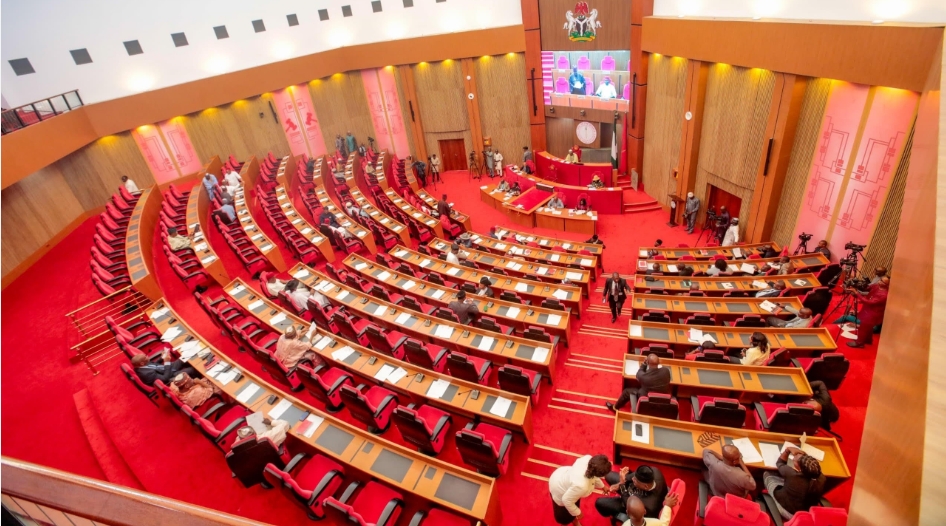
ABUJA, Nigeria — Nigeria’s National Assembly has approved a sweeping constitutional amendment that would end 27 years of exclusive federal control over policing, clearing the way for the country’s 36 states to establish their own police services for the first time since the military abolished regional policing in 1966. The House of Representatives passed the State Police (Constitution Amendment) Bill 289 to 1 on June 11, 2026, and the Senate followed on June 24.
The measure, championed by President Bola Tinubu, would amend Section 214 of the Constitution to recognize both a federal Nigeria Police Force and new State Police Services, alongside Local Government Police Services, operating under nationally set minimum standards. Before taking effect, it requires ratification by at least 24 of the 36 state Houses of Assembly and presidential assent. Supporters say the change will put more accountable, locally rooted officers on the front line of a security crisis federal police have struggled to contain; critics counter it risks arming governors with tools for political intimidation.
Background: A Single Force for 220 Million People
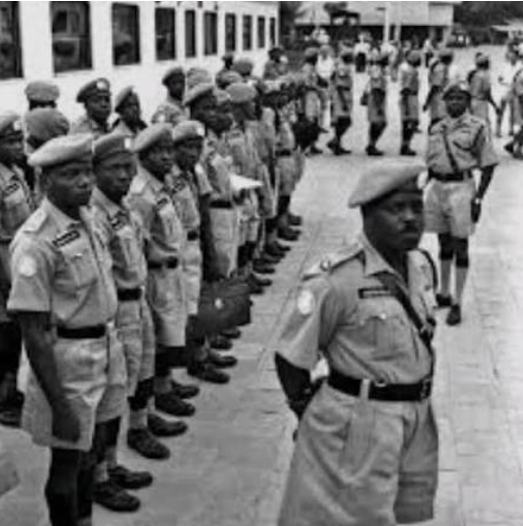
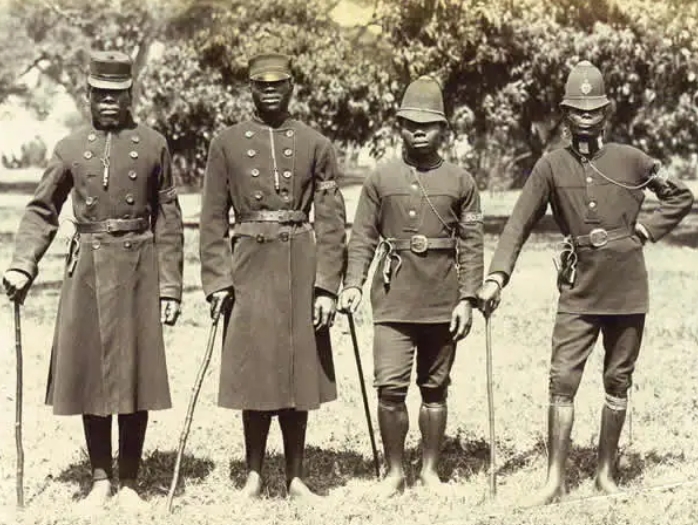
Since a 1966 military decree dissolved Nigeria’s regional police forces after the country’s first coup, the Nigeria Police Force (NPF) has held constitutional exclusivity over law enforcement, codified in Section 214 of the 1999 Constitution. Governors, who serve as their states’ “chief security officers,” have long lacked operational command over police deployed in their territory — a contradiction critics call unworkable in a federal system. State police was formally endorsed by the 2014 National Conference, but successive administrations shelved it, and a 2020 push under President Muhammadu Buhari stalled in the National Assembly.

In the interim, several states created auxiliary outfits the South-West’s Amotekun and South-East’s Ebube Agu among them — operating in a legal gray zone alongside, but subordinate to, the NPF. Meanwhile, insecurity has deepened. According to Nigeria Watch, a conflict-monitoring project, the country recorded 12,954 violent deaths in 2025, up from 12,162 in 2024, bringing the toll since 2006 to more than 222,000 lives lost in over 46,000 incidents. Kidnapping-related deaths nearly doubled to 747 in 2025 from 425 in 2024, with researchers citing a shift from ransom abductions toward organized criminal raids. Northern Nigeria, gripped by Boko Haram’s insurgency and armed banditry, accounted for 81 percent of violent deaths nationwide, even as urban crime, communal clashes and cybercrime strain police capacity in the south.
Key Provisions of the Legislation
The amendment establishes a three-tier structure federal, state and local government policing under a framework of shared but unequal authority. State Police Councils set policy in each state, while independent State Police Service Commissions handle recruitment, promotion and discipline below the rank of assistant commissioner. Each commission’s composition is deliberately broad-based: a governor-appointed chairman confirmed by the State House of Assembly, plus representatives of the National Human Rights Commission, the Nigerian Bar Association, the Nigeria Labour Congress, the Nigerian Union of Journalists, a council of traditional rulers, and retired senior officers from each senatorial district.
The National Assembly, not individual states, sets binding minimum standards for recruitment, training, firearms use and accountability, which states may exceed but not fall below. Funding rests primarily with states and local governments — personnel, equipment, training and welfare — a provision drawing scrutiny given wide disparities in state revenue. State police would handle local crime, while the federal government retains exclusive jurisdiction over terrorism, insurgency, organized and interstate crime, and may deploy the Federal Police Service to “assume temporary operational responsibility” of a state force during a breakdown of public order, subject to presidential authorization, Senate oversight and judicial review. To guard against abuse, the bill bars governors from directing police to target individuals or groups for “partisan, ethnic, religious or sectional purposes,” and lets commissioners refer a disputed gubernatorial directive to a restructured National Police Council for a binding ruling.
Government Perspective

Deputy Senate President Barau Jibrin, a key sponsor, said Tinubu had weighed public anxiety about abuse before endorsing the bill. “While many Nigerians support state police, there are fears that it could be abused or misused for political or ethnic purposes. That is why safeguards have been built into the system,” Jibrin said, adding that officers “recruited from local communities know the people, the terrain, and even the criminals.” Senate Majority Leader Opeyemi Bamidele was more measured: “State police will not be a magic solution to insecurity, but it will significantly strengthen local intelligence gathering, community policing and rapid response capabilities.” On July 8, Tinubu inaugurated a Presidential Working Group, chaired by Chief of Staff Femi Gbajabiamila and including Attorney-General Lateef Fagbemi, National Security Adviser Nuhu Ribadu and Inspector-General of Police Tunji Disu, to draft implementing legislation in parallel with ratification. “The Constitution Amendment Bill establishes the framework for dual policing, but it does not operationalise it,” Tinubu said, announcing the panel.
Expert Analysis
Legal and security analysts broadly welcome decentralization while flagging structural risks. Political analyst Jide Ojo noted Nigeria is now the outlier among federations: “Out of the 14 countries that operate federalism, only Nigeria has been running a unilateral policing system.” Security analyst Ben Okezie urged a phased rollout rather than a simultaneous nationwide launch — pilot states “one or two in the North, one or two in the West and one or two in the South” — arguing decentralized forces could also generate significant employment. Others caution that institutional design alone cannot resolve Nigeria’s deeper drivers of crime. Human rights lawyer Femi Falana said reform must be paired with economic policy: “Unless you address this problem holistically, creating a state police or local government police will not address the crisis,” citing unemployment and poverty as root causes policing cannot fix alone.
This is Part 1 of a two-part series on Nigeria’s push toward state policing. Part 2 examines the political fight over the bill — from governors and civil society who back it to opposition figures who call it a power grab — along with its economic costs, comparisons to other federal systems, and the ob