

A powerful U.S. strike destroyed ISIS networks in Nigeria
AFRICOM Confirms Coordinated Airstrikes in Sokoto State
U.S. Africa Command (AFRICOM) confirmed that American forces conducted airstrikes against Islamic State (ISIS) targets in Nigeria’s Sokoto State on December 25, 2025, acting “in coordination with Nigerian authorities,” according to a command statement released the same day via its official media channels. AFRICOM said the operation targeted identified terrorist elements operating in northwest Nigeria, a region that has seen expanding militant activity in recent years. The command did not disclose casualty figures, citing ongoing assessments and operational security considerations.
President Trump Announces Direct Authorization of the Operation
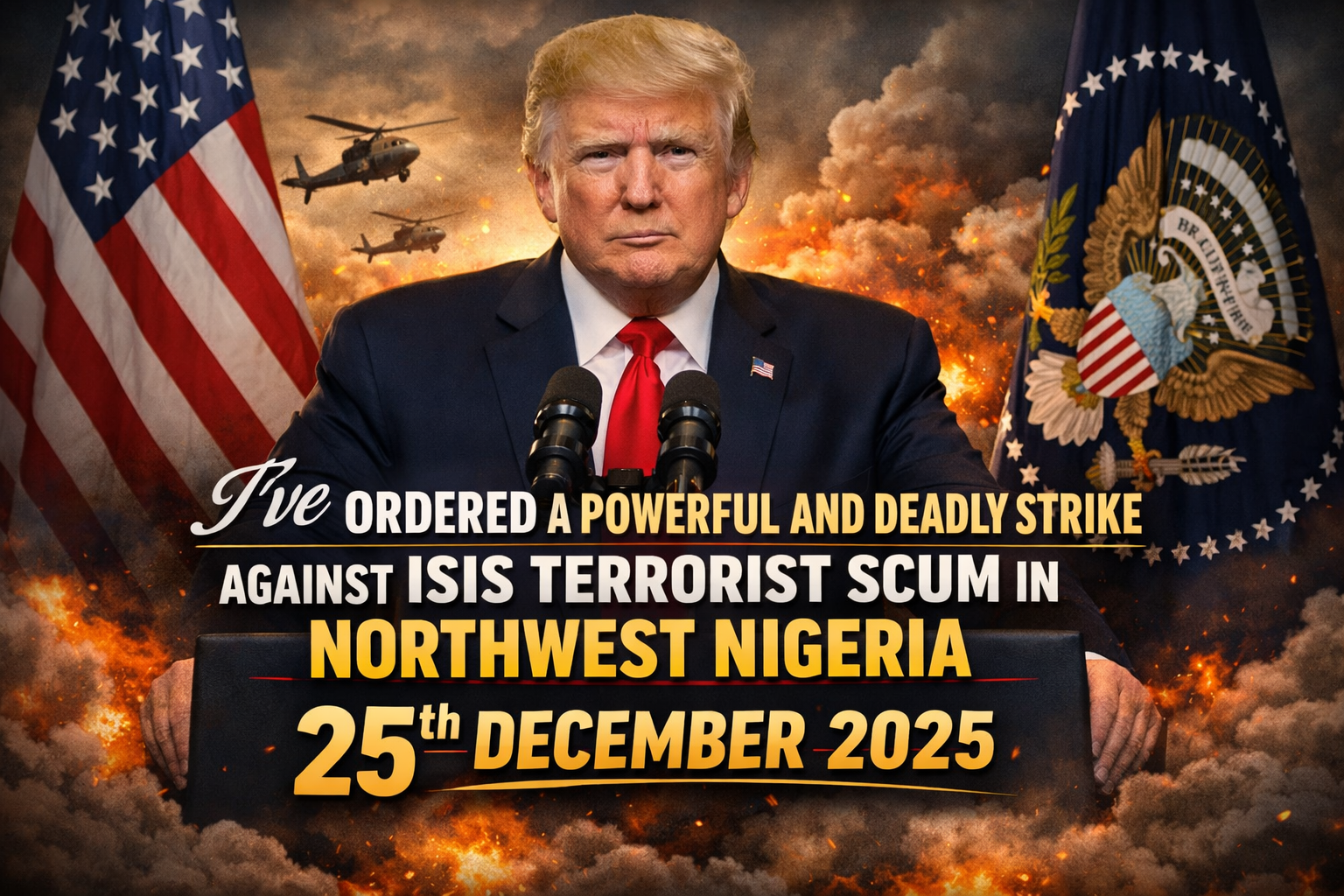
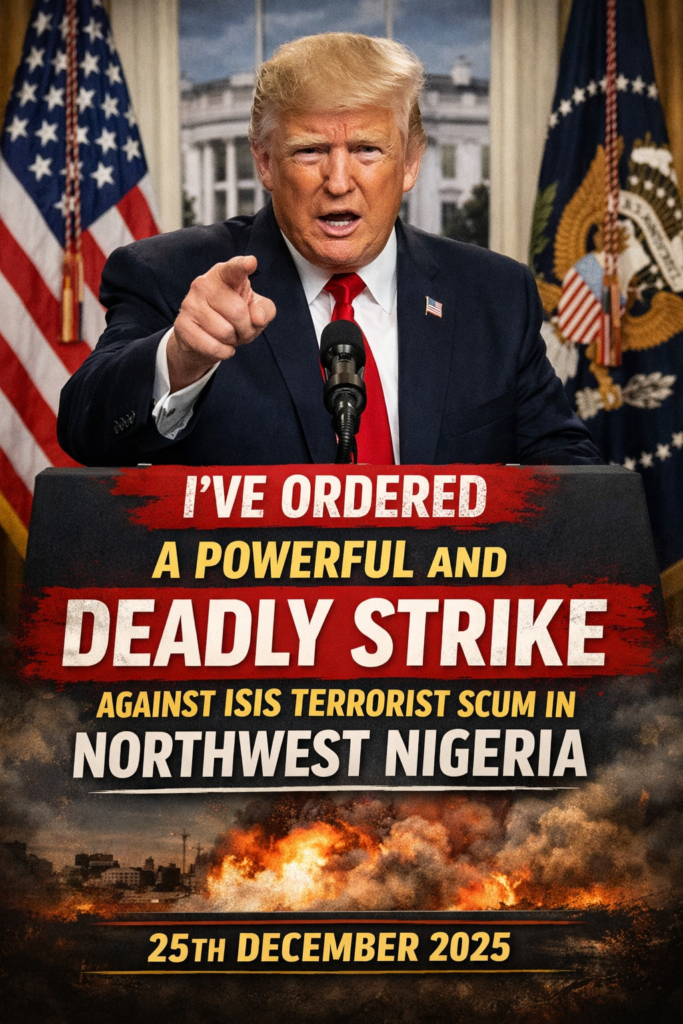
In a statement issued by Washington on December 25, 2025, U.S. President Donald J. Trump said the strikes were ordered directly by him as commander in chief and executed by what he referred to as the “Department of War,” a phrase historically associated with the modern Department of Defence. Trump stated, “The United States launched a powerful and deadly strike against ISIS terrorists in Northwest Nigeria,” adding that the action followed warnings over attacks on civilians, particularly Christian communities.
Rising Extremist Violence Shapes Nigeria’s Security Landscape
Security analysts note that militant violence in northwest Nigeria has intensified alongside the long-running Boko Haram and ISIS-West Africa Province insurgency in the northeast. Data from the Armed Conflict Location & Event Data Project (ACLED) shows thousands of civilian genocide deaths across Nigeria linked to extremist groups over the past decade, though experts caution against framing the violence along a single religious line. Nigerian authorities have consistently described the conflict as driven by a mix of religious ideology, criminality, and weak local security structures.
Strategic Implications for U.S. Counterterrorism Policy in Africa
Strategically, the AFRICOM strike underscores continued U.S. reliance on targeted counterterrorism operations rather than large-scale troop deployments in Africa. U.S. officials have repeatedly said such missions aim to disrupt transnational terror networks while supporting regional partners. While Washington argues these strikes degrade ISIS capabilities, researchers stress that long-term stability in Nigeria will depend on governance reforms, intelligence-led policing, and regional cooperation alongside military pressure.