


Coup: A Test for Democracy and Economic Stability in Benin Republic
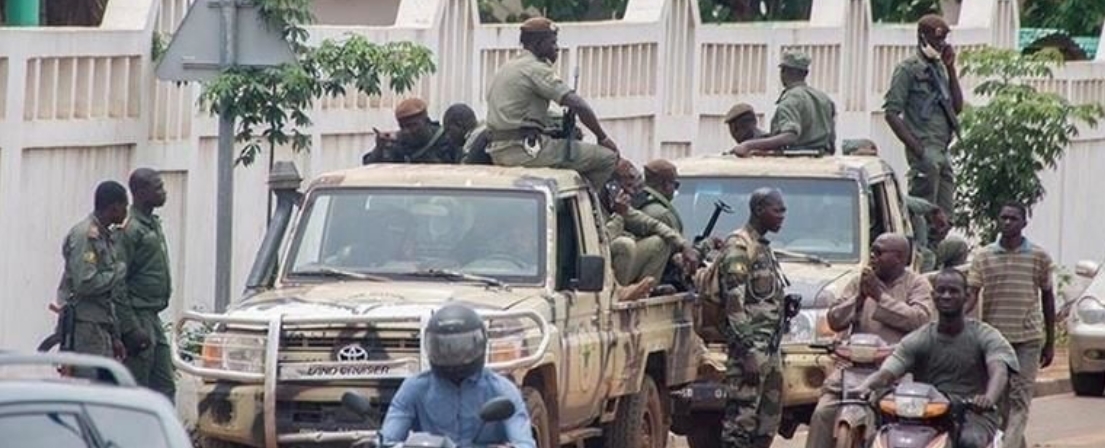
On December 7, 2025, a faction of the Benin Armed Forces, commanded by Lieutenant Colonel Pascal Tigri, seized the state television broadcaster in Cotonou to declare the ousting of President Patrice Talon. The soldiers, self-identifying as the Military Committee for Refoundation, announced the suspension of the constitution and state institutions. This audacious action, marked by gunfire near the presidential residence and key sites throughout the capital, was not a spontaneous act of insurrection. Rather, it was a dramatic outburst of longstanding grievances within a nation previously lauded as “one of Africa’s more stable democracies.”. The coup leaders explicitly referenced Talon’s handling of the worsening security conditions in the north, disregard for deceased soldiers and their families, reductions in healthcare, heightened taxation, and limitations on political engagement as their principal justifications. Remarkably, within hours, loyalist forces, supported by a rapid regional response, effectively thwarted the attempt. The government announced the apprehension of a minimum of 14 individuals, comprising 12 active-duty soldiers, while the coup leader evaded capture. The failed coup underscores the persistent instability in a region where democratic principles face growing threats, even in its most unexpected sectors.
Regional Military Intervention and Diplomatic Resolve
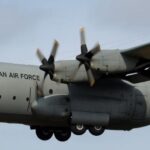
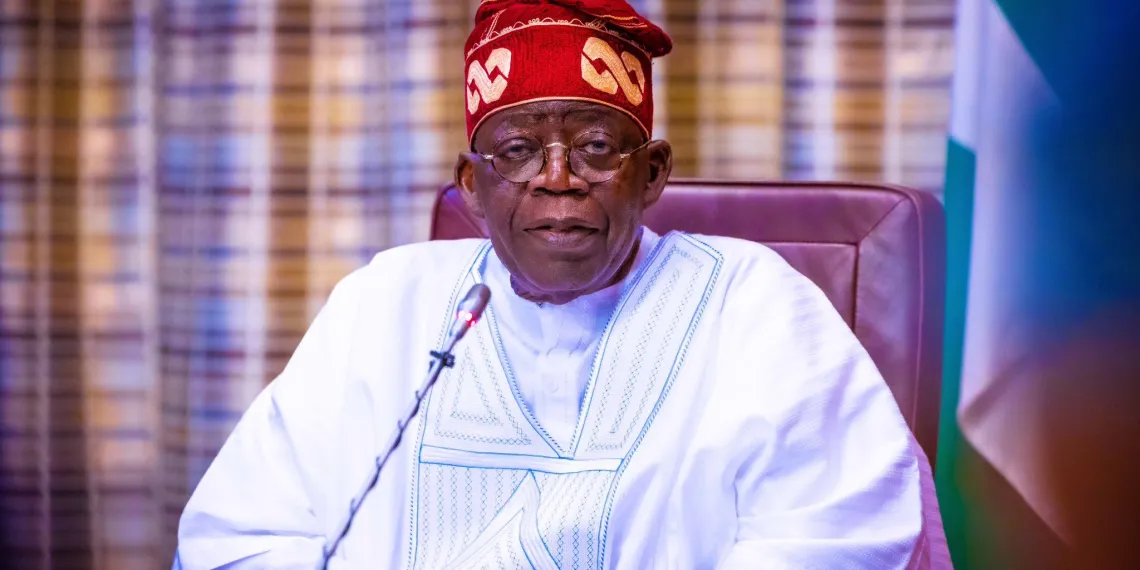
The rapidity and resoluteness of the continental response were crucial in mitigating the crisis. Shortly after the mutineers’ declaration, the Economic Community of West African States (ECOWAS) denounced the act as “a subversion of the will of the people” and mandated the prompt deployment of its standby force. Forces from Nigeria, Sierra Leone, Ivory Coast, and Ghana were deployed to assist the Beninese government in maintaining constitutional order. Nigeria, led by President Bola Tinubu, assumed a pivotal role by deploying fighter jets to seize control of Benin’s airspace and execute precision airstrikes on a military camp where the conspirators had regrouped, subsequently deploying ground troops. This substantial military intervention, sanctioned at the behest of President Talon’s administration, exemplified a proactive alteration in regional security strategy. The African Union promptly released a statement reaffirming its “zero tolerance” policy regarding unconstitutional governmental transitions. This collective action underscored a revitalised, albeit tenuous, commitment by the remaining ECOWAS members to uphold democratic frameworks, particularly in the wake of the departure of military-led states such as Mali, Burkina Faso, and Niger, which had established their own Alliance of Sahel States.
Diplomatic Caution in a New Geopolitical Era
In contrast to the robust regional military response, France’s reaction to the events in its former colony was notably restrained and procedural. The French embassy in Cotonou released security advisories, advising its citizens to stay indoors, and officially refuted rumours on social media that Benin government officials had taken refuge on its premises. This understated position signifies a substantial reassessment of France’s role in West Africa, a region where its historical influence is increasingly challenged. The subdued reaction contrasts markedly with the jubilant tone noted on various pro-Russian social media platforms after the coup attempt, highlighting the persistent geopolitical struggle for dominance in the “coup belt”. France’s prudent stance indicates an understanding of the strong anti-French sentiment exploited by military juntas in adjacent Sahel countries to rationalise their coups and remove French forces. By eschewing any semblance of direct intervention, Paris appears to be manoeuvring through a convoluted new reality in which overt engagement could prove counterproductive, undermining the very government it may seek to bolster.
Resilient Yet Vulnerable: Benin’s Economic Paradox
Notwithstanding the political upheaval, Benin’s economy has demonstrated short-term resilience, with no immediate indications of sustained disruptions to trade or financial markets subsequent to the coup attempt. This stability is supported by robust institutional safeguards and decentralised economic operations. Before the crisis, Benin experienced a favourable trajectory, with a 7.5% GDP growth in 2024, propelled by strategic infrastructure initiatives and industrial zones such as Glo-Djigbé. This growth narrative conceals profound vulnerabilities revealed by the coup attempt. The national economy is under significant strain due to regional trade dependencies, especially its dependence on landlocked Niger for a substantial share of its cross-border trade. Previous ECOWAS sanctions on Niger resulted in significant disruptions, necessitating expensive trade rerouting and leading the International Monetary Fund (IMF) to adjust Benin’s growth projections downward. Moreover, enduring governance deficiencies, judicial inefficacies, and the escalating menace of jihadist violence from the north persist in dissuading investment and jeopardising long-term development. Diverse trade partnerships and a pro-business reform agenda provide some alleviation; however, the persistent political instability significantly undermines the nation’s economic outlook.
A Regional Contagion: Governance Failures and the Coup Cycle
The attempted coup in Benin is not an isolated event but rather indicative of a worsening crisis of governance and legitimacy throughout West Africa. Analysts and diplomats observe that the resurgence of military interventions stems from persistent problems of poor governance, entrenched leadership, and public disillusionment with political systems that do not fulfil their promises. Former Nigerian Ambassador Suleiman Dahiru contends that in numerous states, “elections have become entirely ineffective,” as leaders are reluctant to relinquish power and institutions lack the strength to ensure accountability. This environment fosters a permissive climate for military adventurism. Every successful coup, exemplified by those in Niger, Burkina Faso, and Mali, legitimises the strategy and incites imitation, thereby establishing a self-perpetuating cycle of instability. This poses an existential threat to ECOWAS. The bloc’s authority has been significantly compromised by the exit of the three Sahel states, and each coup attempt challenges its unity and effectiveness. The prompt and vigorous reaction to the Benin crisis clearly aims to halt this trend and reaffirm constitutional order; however, it fails to tackle the fundamental socioeconomic and political grievances that incite military discontent.
Juxtaposition with David Hundeyin’s Perspective
The examination of systemic failure reveals a striking similarity with the perspectives of Nigerian investigative journalist David Hundeyin. Although not explicitly cited in the search results, Hundeyin’s extensively recorded criticisms of West African governance provide a perspective for analysing the Benin incident. He consistently contends that the region’s political elites have established a self-serving system detached from the populace’s needs, wherein democracy serves merely as a facade for oligarchic dominance. From this viewpoint, the soldiers’ complaints, disregard for the military, reductions in public health funding, and economic distress are legitimate indicators of a breached contract. Hundeyin would likely argue that the rapid ECOWAS intervention, spearheaded by Nigeria, was primarily aimed at safeguarding a political status quo that advantages the interlinked elite throughout the region, rather than upholding abstract democratic principles. This perspective posits that in the absence of authentic structural reforms targeting inequality, corruption, and civic participation, military interventions will persist, and regional organisations such as ECOWAS will merely address symptoms rather than remedy the underlying issues. The thwarted coup in Benin is not simply an unsuccessful attempt at seizing power, but rather a cautionary indication of the significant disjunction between the ruling elite and the populace, a disjunction that poses a risk of destabilising the entire region unless adequately addressed.