


Constitutional Breach: How Alterations to Nigeria’s Tax Laws Sparked a Political Crisis

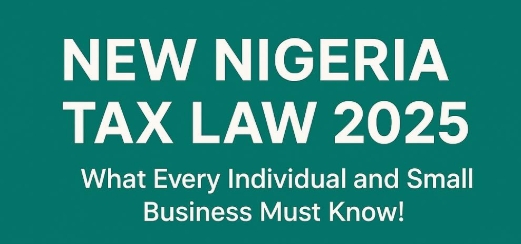
On December 17, 2025, A member of Nigeria’s National Assembly raises a point of order. Lawmaker Abdussamad Dasuki alerted the House to discrepancies in the newly gazetted tax laws.
A significant political and constitutional crisis is unfolding in Nigeria over allegations that the nation’s newly harmonised tax reform laws were unconstitutionally altered after being passed by the legislature. The controversy strikes at the heart of Nigeria’s democracy, raising profound questions about the separation of powers, the integrity of the law-making process, and the rule of law.
This article provides a detailed, six-part analysis of the discovery of the discrepancies, the nature of the alleged alterations, the constitutional violations at stake, the ensuing political backlash, the potential economic fallout, and the ongoing legal and investigative efforts to resolve the crisis.
1. The Discovery: Lawmakers Sound the Alarm on Legislative Discrepancies
The controversy erupted on the floor of the House of Representatives on December 17, 2025, when Honourable Abdussamad Dasuki (PDP, Sokoto) raised a matter of privilege. Dasuki presented a startling claim: the versions of four major tax reform Acts being circulated by the Federal Ministry of Information and published in the official gazette were materially different from the harmonised bills passed by the National Assembly. He stated, “I took my time in the last three days to look at the gazetted copy… what was passed on this floor is not what is gazetted”.
His alarm prompted the House to constitute a select committee to conduct a forensic comparison, which later reported that substantive provisions had been inserted, deleted, or modified after parliamentary approval. The Speaker, Tajudeen Abbas, acknowledged the gravity of the allegations and pledged that the leadership would “look into the allegations and take appropriate steps in the national interest”.
2. The Alterations: A Forensic Look at Deleted Safeguards and New Powers
Investigations, including a detailed analysis by FIJ (Foundation for Investigative Journalism),

have highlighted specific, troubling discrepancies between the parliamentary and gazetted versions.
The changes are not minor clerical edits but substantial alterations that shift power and weaken oversight. Key accountability mechanisms approved by lawmakers were removed. For instance, provisions requiring the Nigeria Revenue Service (NRS) to submit quarterly and annual reports directly to the National Assembly were erased, leaving reporting only to the Executive’s Auditor-General.
Furthermore, clauses empowering the legislature to summon the NRS Executive Chairman for accountability were stripped from the final law. Conversely, new coercive powers not found in the passed bills appeared in the gazette.
These include provisions for law enforcement to arrest upon suspicion of a tax violation and to garnish accounts or seize property without a court order. A mandatory requirement for petroleum-related tax computations to be made in U.S. dollars was also inserted
Key Alleged Alterations in the Gazetted Tax Laws
| Area of Change | What Lawmakers Passed | What Was Gazetted | Impact |
| Oversight & Reporting | NRS must report quarterly/annual to National Assembly | Reports only to Auditor-General | Weakens legislative oversight of revenue. |
| Executive Accountability | Legislature can summon NRS Chairman for accountability | This power of summons was removed | Reduces executive accountability |
| Enforcement Powers | No provision for arrest without due process | Authorities granted power to arrest on suspicion | Risks abuse of power against citizens |
| Judicial Oversight | Court orders required for enforcement actions like garnishment | Allows garnish without court order | Bypasses judiciary, weakens checks and balances |
| Tax Computation | Petroleum taxes computable in transaction currency | Mandatory computation in U.S. dollars. | Introduces new fiscal burden/rigidity |
3. The Constitutional Breach: Violating the Separation of Powers
Legal experts and civil society organisations have uniformly condemned the alleged alterations as a grave constitutional violation. Nigeria’s 1999 Constitution is explicit: Section 4 vests exclusive law-making power in the National Assembly. The role of the President, as outlined in Section 58, is limited to either assenting to a bill or withholding assent and communicating reasons to the legislature. Senior Advocate of Nigeria (SAN), Mr. Dayo Akinlaja, emphasised, “It is unconstitutional and invalid for a gazetted law to be different from the contents of a bill as passed by the National Assembly”.
The Civil Society Legislative Advocacy Centre (CISLAC) warned that such an act, if confirmed, “would amount to a grave breach of the Constitution and a threat to democratic governance,” as it fundamentally undermines the separation of powers. By unilaterally altering the law after passage, the executive branch is accused of arrogating legislative power to itself, a move activist Deji Adeyanju described as “legislative fraud and an affront to the sovereignty of the Nigerian people”.
4. Political and Public Backlash: From Opposition Parties to Citizen Outcry
The allegations have triggered a fierce political storm. Opposition figures have seized on the issue to criticise the Tinubu administration. Former Vice President Atiku Abubakar called for the laws’ suspension, stating, “Something has been appended to the law, and some people have gone ahead to alter it. This is falsification, and it is criminal”. Labour Party’s Peter Obi described it as a “dangerous escalation from poor governance to outright abuse of the law,” warning that it erodes public trust in governance. The African Democratic Congress (ADC) was particularly scathing, alleging the changes revealed a “criminal mindset” and “totalitarian instincts” in a bid to concentrate power.
Public reaction has been marked by anger and mobilisation. Groups like the Take-It-Back Movement have begun organising nationwide protests, labelling the reforms “anti-people and illegitimate,” designed to exploit ordinary Nigerians already grappling with economic hardship. In response, the Presidency has dismissed the allegations as “opposition noise” aimed at creating controversy. Presidential spokesman Temitope Ajayi insisted the laws were enacted through due process and implementation would proceed as scheduled on January 1, 2026.
5. Economic and Legal Uncertainty: Investor Fears and Implementation Risks
Beyond politics, the controversy creates significant economic and legal headwinds. The reform package was originally designed to modernise Nigeria’s tax system, widen the base, and reduce reliance on borrowing. However, the cloud of illegitimacy now threatens these goals. CISLAC cautioned that the uncertainty “could weaken investor confidence, deepen economic hardship, and set a dangerous constitutional precedent”. The lawmakers’ report similarly warned of exposing Nigeria to litigation risk, regulatory uncertainty, and loss of investor confidence.
With key provisions vulnerable to being struck down by the courts, businesses and taxpayers face a confusing landscape. The mandatory U.S. dollar computation clause, for example, introduces new foreign exchange burdens that were never debated. This environment of instability could severely hamper the smooth implementation of the new tax regime, undermining its core objectives of clarity and efficiency.
6. The Path to Resolution: Legal Challenges and Legislative Investigations
The crisis is now moving toward potential resolution through parallel legal and investigative channels. Legislatively, the seven-man ad-hoc committee established by the House must conduct a thorough probe and recommend corrective action, which could include a fresh legislative review. Concurrently, the judiciary is being called upon. Former Senator and legal practitioner, Dino Melaye, has taken a formal legal step.
Through his law firm, he served a three-month pre-action notice on the National Assembly, challenging the constitutional validity of the Value Added Tax (VAT) provisions within the new laws, which he argues fall under state, not federal, jurisdiction. While this specific suit predates the alteration scandal, it signals a readiness for judicial intervention. Lawyers like Sylvester Emokhare suggest that if the House investigation confirms the alterations, “a legal action [could be] instituted to enable the court to nullify the altered law or strike down the offensive sections”. The coming weeks will be critical as these processes determine whether Nigeria’s constitutional order can rectify this breach.