
Budget Broken: Inside Nigeria’s Shocking Political Bargain

Explosive Bribery Allegations Rock Nigeria’s Parliament
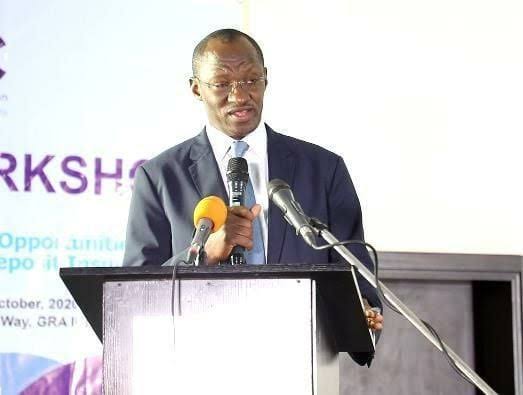
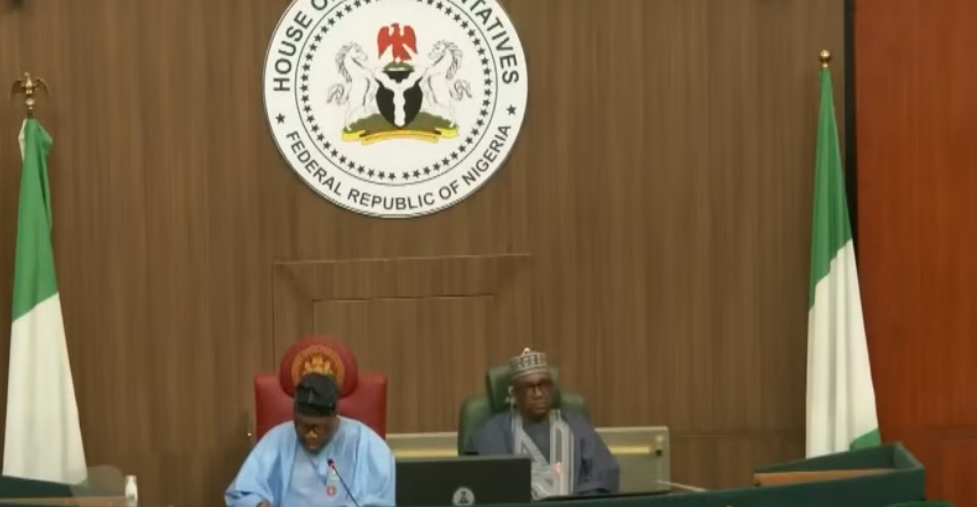
A seismic allegation has struck the heart of Nigeria’s democracy, with The People’s Gazette reporting that senators and members of the House of Representatives were bribed by the presidency to facilitate the non-implementation of the 2025 national budget. This claim stands in stark contrast to recent legislative activity, notably the harmonisation of a critical tax law championed by Honourable Dasuki from Sokoto State, who hailed the process as a collaborative success.
The juxtaposition reveals a fractured system: while lawmakers publicly celebrate unifying fiscal reforms, they are accused of privately betraying the public trust for personal gain. As noted in the Gazette’s October 2025 report, this scandal threatens to unravel the fragile covenant between the government and its citizens, raising urgent questions about whose interests are truly being served in the National Assembly.
Budget Betrayal: How Public Funds Were Allegedly Diverted
The People’s Gazette investigation details a deliberate scheme where taxpayer money, earmarked for national development, was instead used to corrupt the very legislators tasked with oversight. One lawmaker, speaking anonymously, described the bribes as “coordinated incentives” to ensure the 2025 budget, a document promising roads, schools, and healthcare never moved beyond paper. This incident occurs alongside Honourable Dasuki’s public praise for the harmonised tax law, intended to boost revenue.
The irony is palpable: a law designed to improve fiscal health is being overshadowed by allegations that existing funds are being weaponised for political survival. Financial analysts caution that these actions undermine economic planning. According to the World Bank, consistent budget implementation is pivotal for growth in emerging economies; deviations directly exacerbate poverty and infrastructure deficits.
The Crushing Impact on Nigerian Lives and Livelihoods
The adverse effects of non-implementation are both immediate and devastating. Communities awaiting critical projects from electricity grids to hospital upgrades, face prolonged neglect, deepening regional inequalities. Economists stress that stalling the budget disrupts contracts, stalls job creation, and erodes investor confidence. Meanwhile, the alleged bribery scheme subverts legislative accountability, turning lawmakers from public servants into profit-seeking actors.
As public policy expert Dr. Nnenna Okechukwu stated in a November 2025 Premium Times analysis, “When budgets fail to translate into tangible goods, public trust evaporates, fuelling unrest and apathy.” The human cost is quantified in missed opportunities: the 2025 budget allocated over ₦500 billion for education and health—sectors now in limbo, directly affecting millions of vulnerable Nigerians.
A Political Time Bomb for 2026 Elections?
A looming question is whether the suspended budget funds are being preserved for the 2026 election cycle. Political strategists suggest that retaining control over these resources could finance campaigns, reward loyalists and undermine the opposition. This manoeuvre would turn the budget from a development tool into a war chest, entrenching a cycle of corruption.
The allegations, if proven, reveal a deeper governance crisis where short-term political survival overrides long-term national interest. As Nigeria approaches another election season, citizens are left to wonder if their future is being auctioned for power. The harmonised tax law, once a symbol of progress, now risks being remembered as a facade for systemic decay.
Forged Nigeria Harmonised Tax Law 2025
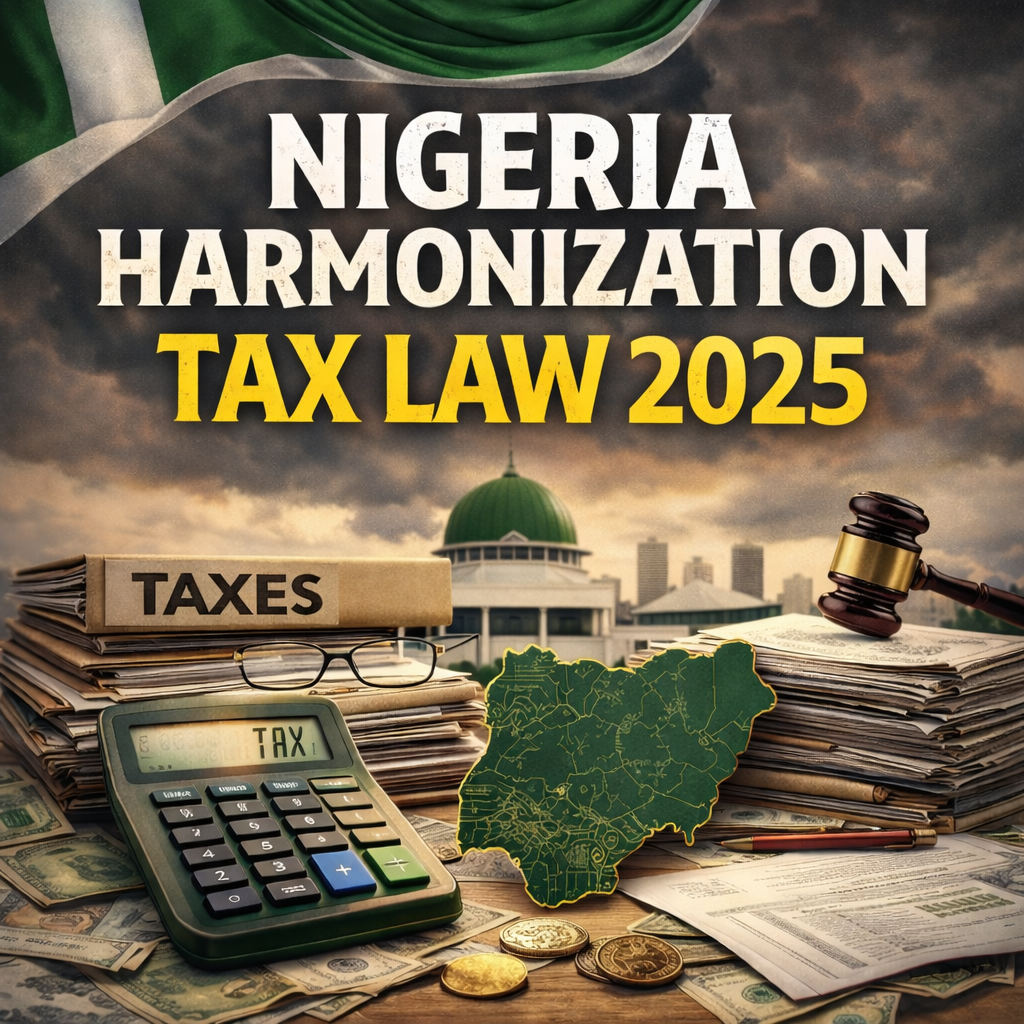
Furthermore, Honourable Abdul Samad Dasuki of the PDP, Sokoto, raised a critical alarm on the floor of the National Assembly, declaring, “The harmonized copy that we passed in this national assembly is different from the gazetted copy.” Supporting this grave accusation, another honourable member, Mansur Soro, asserted that the discrepancies were “not accidental or coincidental.
They were intentional.” This led to the damning conclusion that even a single provision altered deliberately renders the entire tax law forged. A responsible presidency, they argued, would have immediately withdrawn the document to avert national and international embarrassment, an act of good faith that would have suggested an unintentional error. By instead doubling down, the government transforms the act into a deliberate criminal forgery, seeking to impose a falsified law upon the Nigerian people, an action deemed utterly unacceptable.
A Damning Revelation of Orchestrated Deception
The directive from the Senate President to conceal the certified true copy, as reported by The Peoples Gazette, transforms the allegations from theoretical to concrete. This act provides a tangible mechanism for how the forgery alleged by Honourable Dasuki could occur, revealing a calculated attempt to subvert the legislative process and obscure the authentic will of the Parliament. It shifts the scandal definitively from one of potential administrative error to one of apparent orchestrated deception at the highest levels of the National Assembly.
The Unanswered Question Imposed on a Nation
Consequently, this concealment deepens the institutional crisis, forging a direct link between the bribery allegations over the budget and the manipulation of the tax law. The Nigerian public is left with a profound breach of trust and a single, glaring question: if the authentic law passed by their representatives is being hidden, what falsified version is being imposed upon the nation in its stead? The refusal to transparently rectify this matter confirms a governance model that prioritizes political manipulation over constitutional duty and public welfare.